Sarah J. Carlson

Contemporary Young Adult Author

Category Archives: Writing

The post-it notes that helped get me through

0


IMG_7442Revisions and major re-writes are hard. To put it VERY mildly. Scuplting your latest draft into a thing of beauty require completely different mental processes than pounding out that initial first draft. And, for me, each round of revision requires a focus on a different part, starting with each POV character’s internal and external story arc, then the evolution of their relationships with secondary characters, then setting/dialect, then finally line edits and word count. Then, for me at least, repeat the process again after any feedback that leads to major changes.

To help me keep my brain focused on the right things, I plastered the wall over my computer with notes to self, presented to you in no particular order above.

Stakes: What’s at stake for each character? The world (if appropriate)? How are the stakes rising with each section, each page? What happens if the main character gets what they seek? What’s at stake if they fail, for them personally, but also possibly their loved ones, and their community/world? And why should I care as a reader?

Goal, Motivation, Conflict: What is the character’s goal? Why do they NEED it? And what’s getting in their way? Every chapter should have it’s own GMC and should move the overall internal/external plot forward. Thankfully, I had several critique partners who hounded me about this 😀 Gotta love good CPs!

attack hug

Agency: What active role is the main character taking to achieve their goal, to resolve the internal/external conflict? What choices are they making that drive the plot forward and have serious consequences?

Backstory: This I got from Angela Ackerman’s Backstory Checklist.

Chapter One: I literally wrote at least a dozen different chapter ones for my most recent WIP. Finding a starting point was a challenge. Beyond that, it was hard find the balance of essential information/backstory with action, dialogue, and forward momentum.

airplane panic

Okay, that’s an exaggeration, but still it’s no easy task because chapter one is the foundation of your book, where you create the contract with your reader, set expectations about genre, voice, character, central conflict, hint at obstacles and antagonists, etc. I like to think of it as the seeds you plant that will grow into the rest of your story. Writing a good first chapter is an art.
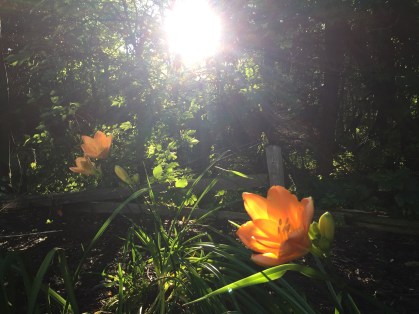
IMG_6664(My back garden at dawn)

The Backstory and Chapter One post-its are directly tied to my next post-it, what can the reader find out later? One of my greatest struggles with chapter one was the complicated situation that set the stage for one of my POV character’s inciting incident. But how much was absolutely essential for the reader to know to get the gist of what was going on and to connect to the character? Asking what the reader can find out later helped me stay focused on writing the active scene as opposed to drowning them in all the stuff that set the stage, which could be dribbled in over the next few chapters.

Patience/take your time: waiting for critique feedback, taking revisions slow, putting the WIP through another round of feedback can be excruciating when you just want to be DONE. Or maybe you’re 99% certain you are done. But sculpting you WIP into the best it can be is what really matters in the end, whether your goal is to get an agent, or get it on submission, or prepare it for publication (self-publishing, Big Five, and everything in between).

Open mind: Getting critique partner feedback can be very hard. Good critique partners should always give you hard but constructive feedback that challenges you as a writer. I can’t count the times CPs have called me out on stuff I didn’t realize or ignored. There were so many times I just wanted to ignore hard feedback, rationalize it away, but then weeks or sometimes months later, I realized they were right. Of course, the caveat is that it must be true to your story, not what they think your story should be.

Nice vs. necessary: Word count was a big issue for me in this revision. I needed to cut at least 15,000 words. Hence nice vs. necessary. What scenes, characters, bits of dialogue and prose, lines, even words are absolutely necessary to move plot and character development forward? If it doesn’t fit into that category, cut it. A scene description might be pretty, a bit of dialogue funny, or a bit of prose may be lyrically inspiring, but if it’s not moving things forward, it’s not needed.

It’s not just what you think is the goal, the reader must feel it: You won’t be sitting next to a reader telling them, oh, Bob needs to figure out he’s worthy of love, or Susie needs to realize they can love their father and hate what he did. The reader needs to be able to infer that on their own. If multiple CPs aren’t picking up on it, then it’s not working.

Filter words/interiority reveals something new: This is also related to slashing word count. For more on filter words, here’s something from Pub(lishing) Crawl. And when your character is thinking something make sure it’s revealing new information or perspective, not just rehashing what’s already on the page.

These post-it notes were some of things that helped me emerge from this round of intense re-writes, revisions, and line edits feeling proud of what I sculpted.

IMG_7111


It’s been a long road

0

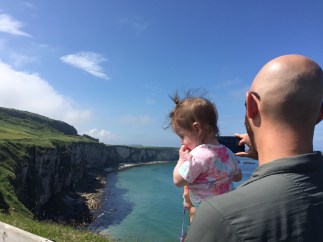
IMG_7330(My daughter at Devil’s Lake State Park)

It’s been a long road.

I’ve spent the last two years feeling like I’m running a marathon, nearing the finish line, only to have it moved farther and farther away. Of course, I’m only racing against myself. But feeling like I’m perpetually so close makes it hard to stop pushing . I started working on this novel in November of 2011, set it aside, then dug it up again after moving to Singapore in 2013. It’s been completely re-written several times, based on feedback from critique partners and my agent. On my computer, literally dozens of different saved versions exist. My document of “cut stuff” is twice as long as the manuscript itself.

It’s been daunting and frustrating at times. It seemed impossible. I wanted to give up, doubted my capacity as a writer. Doubted my ability to find my way through.

IMG_5297(My daughter hiking in the Canadian Rockies)

But my writer friends believed in me, which helped me believe in myself.

Now I’m thrilled to say, after filling entire notebooks with revision planning and brainstorming around feedback… After almost completely re-writing one of the two POV story lines (yet again)… After four rounds of feedback from both new and old critique partners, with comprehensive revisions in between… After seven months of late nights and very early mornings…. And lots and lots of this:

img_6787.jpg

(A flat white, my favorite coffee drink)

Now I can say that I’ve finally crossed the finish line for this shiny new version of my novel and sent it to my agent. I’ve been working on it so long now that I can’t objectively say if it’s ready to go on submission, but I am so proud of what it’s become.

IMG_7356 - Copy

(My celebratory cupcake with ridiculous quantities of frosting)

Writing: Go slow to go fast

0

Better to go slow 4

(Inis Mor, Aran Islands, Ireland, taken on our recent vacation)

This quote, or quotes similar, are used all over the place: the corporate world, leadership trainings, education, technology, etc. Apparently the founder of the Roman Empire even said “Festina Lente.”  “Make haste, slowly.” A reminder to himself to perform duties with a balance of diligence and urgency.

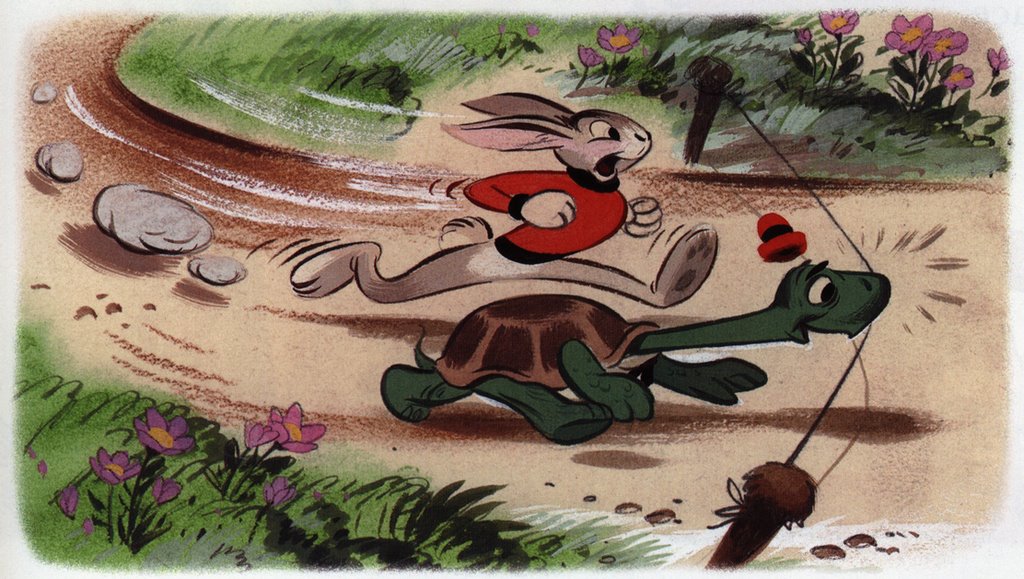
Oh, and Aesop’s fables. I’m sure you’ve heard of the Tortoise and the Hare.

(retrieved from

The same philosophy should be applied to writing your novel. Not on the first draft per say, that’s just exploratory, but rather when you get feedback from critique partners, editors, or your agent on your book baby. When you’re working trying to sculpt that probable hot mess of a first draft into something beautiful.

For me personally, I just got some unexpected developmental feedback while in the throes of trying to cut 10,000 words of what I thought was nearly a final draft. By the way, I had cut over 5,000 without even finishing the read-through; pretty much all unnecessary prepositional phrases, dialogue, description. And when I say final draft, I mean I thought for real this time, not like the last four times …

facepalm-nicolas-cage

My agent is right. She called out some things my subconscious was quietly nagging me about. But now, I’m not quite back to square one, but I have to take a step back and look at plot … again.

It’s frustrating, but this feedback will push my WIP to be even better. And as much as I want to be done a year ago, I need to take time to breathe, process, think it through, rather than rushing to… Get. It. Done.

I need to free write on her main suggestions, let my brain go crazy processing the ideas, blocking out a scene, writing bits of dialogue, seeing through different characters’ eyes. Then pull the good stuff from that, new potential plot points, and throw them on some sticky notes to make them concrete and, well, movable. Next, I need to toy around with those ideas, expand or change existing scenes or write entirely new scenes.  See what happens. Then I need to consult with trusted crit partners and my agent to see if I’m going in the right direction. Or they might have genius ideas.

As much as I want to just be done, I need to take time and space to make sure I do it right. Because writing in the wrong direction just to get it done, only hurts that beautiful thing you’re trying to sculpt. Been there, done that more than once.

Whether you self-publish or attempt the traditional route, you only get one shot to put that book baby out into the world. Well, in traditional route, you get one shot with each agent (or perhaps, if you’re lucky, a Revise & Resubmit) then if you get an agent, you likely get one shot with each publishing house. So that baby needs to be as sparkly and shiny and perfect as possible.

So grab a coffee or a beer ….

Or both 😛

And go slow to go fast. Take the time to do it right, whether it’s line edits, processing and applying developmental feedback, or even plotting before you embark on your book baby-venture.

Take the time to sculpt your book baby into the most beautiful creation it can be.

Happy writing!

How to (hopefully) cut 10,000 words

4

I’ve finished the fourth draft of my WIP, Hooligans in Shining Armour. Fourth draft of the third version written over nearly three years, to be clear. And… I’m about 10,000 words over where I’d like to be.

airplane panic

Yeah.

I’ve also been waging a war on the rather large gardens around my new house, which have been neglected the entire season because baby and work and writing. As I was yanking out another five-foot-tall thistle, it dawned on me. Kind of a perfect simile for my next editing adventure, the weed jungle hiding the beauty underneath. When I started weeding, I wasn’t even sure which were weeds. After some digging (and finding evidence of previously-chopped weeds), internet searching, and consulting with my neighbor, the master gardener, I feel fairly confident I’ve got it mostly figured out. Here’s a pre sample of my gardening adventure.

IMG_7233

So…cutting those 10,000 words. I have a multi-pronged plan of attack, as I did with weeding. I’m going to take a step back, be objective, and ask myself some hard questions. In the end, hopefully I’ll have a more focused, streamlined manuscript where every line has a purpose: to advance plot and/or characterization. It will likely require the killing of several darlings. The good news is, not only will weeding your WIP help with word count, it will help with oh-so-essential pacing as well. I usually look first for scenes and big picture things to cut, then go line by line.

Before I get to work on major WIP weeding, I always save a new version of the document and create another document to save everything I cut, in case I decide later that, yeah, it actually was necessary.

Here’s my plan. 

Step 1: Stop freaking out. It IS possible.

Step 2: THINK THROUGH the main plot and subplots. Ask yourself how subplots are progressing the main plot or driving essential character development. If they are not, consider cutting.  I created a color-coded diagram of both the main plots and subplots for both MCs. This helped me to distance myself and think objectively, as well as see new connections between plot and characters.  

Step 3: List out all the characters and their roles. Ask yourself, what role does each serve for the MC? Are there any characters that duplicate the same role and can be cut?

Step 4: With each scene, potentially with each paragraph, ask yourself, “is it nice or is it necessary?” I’m going to have to ask myself this a lot. I have plenty of scenes that brim with conflict or humor, or both. Are they nice to have and enjoyable for the reader? Probably. But are they serving a unique, essential role in progressing the main plot and/or character development? Are there other scenes that get the same job done? If the answer is yes, then it is just nice to have, not necessary. Start cutting.

Step 5: Now start from the top. Go line by line. Does the reader need all the setting descriptions to picture the scene? Do they need all the body language? Dialogue tags? Or is some of it just nice to have. In dialogue, every line should advance plot or character. If it doesn’t, it’s just nice to have. Cut it. Look for places where you can write more succinctly. Trim the fat. Pull the weeds. Cut any line, any word, that is not essential to establishing new setting, advancing plot or developing character. It’s amazing how much this adds up. Cutting even one hundred words per chapter will add up to thousands.

Step 6: Admire all your hard work, then take some time away from it. Read through your MS again to make sure it still flows and makes sense. Personally, I try to get this read through done relatively quickly to ensure everything flows and connects, which I can lose a sense of if it’s spread out over too many days or sittings.

Step 7: Send to your beta readers.

Oh, and here’s my garden post picture.

thumbnail_IMG_7235

Wish me luck and objectivity! Happy writing.


Prioritizing and setting goals (when you’re a writing overachiever)

2

Shhh…. baby’s napping, let’s see if I can finally pound out a blog post for the first time in like nine months.

tip toe

Crap. In the time it took to figure out WordPress doesn’t like Google Chrome for uploading GIFs, she woke up 😛

No, but seriously, it’s been a crazy, stressful, life-changing year on pretty much every front, all positive, but stressful none-the-less.

Here goes….

Last July, I had the amazing opportunity to return to Belfast, the setting for Hooligans in Shining Armour, for some targeted setting and cultural research. And also to meet my Belfast editor/linguistic consultant, who’s amazing by the way <3.


IMG_4995

(the gate in the peace wall between the Falls and the Shankill in Belfast.  It closes every night)

After this, I was able to finish revising Hooligans based on the first round of round one of developmental feedback from my amazing agent, Claire Anderson-Wheeler from Regal Hoffman & Associates. I sent it off to her about seven month pregnant then started back working for the fall (I work in the schools).

She got back to me with feedback in about 6 weeks–five and a half pages of further developmental edits.

I had my beautiful daughter, Norah, on October 21st, and returned to working full-time in the schools in January, while slowly, very slowly, started tackling re-writing my entire novel. Because, goals and conflict.

After looking at over a hundred houses, my husband and I finally found and purchased a new house! We moved in May, and we’re mostly (kind of) settled.

And now my family had the amazing opportunity to do some traveling to Iceland, the Republic of Ireland and (per husband request) Northern Ireland.

So where does that leave me?

Understanding the importance of priorities and setting realistic goals around writing. Which is especially hard when I’m an overachiever by nature. I want things to be perfect, and, especially with Hooligans, I want to be DONE. (I’ve been working on this one for nearly four years!) So I need to step back, be patient with myself, and think objectively.

I’m work in the schools, so I don’t (technically) return to work until the end of August, though obviously will have tons of prep work. That means I get to spend loads of time with Norah 🙂 And I’m hoping to re-dedicate myself to my secondary career as a writer. During the school year, blogging, engaging people on Twitter, attending writer’s conferences, and critiquing all fell by the wayside.

van-wilder-eek-face-o

Because priorities. Because in my mythical free time while Norah’s sleeping, writing Hooligans was most important. But both are important pieces in continuing my career as a writer.

I’ve just finished the fourth round of revisions on Hooligans and it’s so close! I’m LOVING it now and am so thankful I have an agent that believes in my characters enough to push me this hard.

For me, naming my realistic goals helps them become real, breathing things. So here goes:

  1. Finish one final revision of Hooligans, then send to my amazing far-flung crit buddies.
  2. Based on CP feedback, revise and send the next chunk of Hooligans to my agent.
  3. Blog once a week in the hopes of rebuilding my social media presence, which has taken a serious hit. Write and schedule posts for during the school year as well, hopefully at least once a month.
  4. While my MS is with CPs, play around with some other novel ideas.

Now that it’s out there on the internet, I have to be patient with myself and do it, right?

Happy writing!