Sarah J. Carlson

Contemporary Young Adult Author

Tag Archives: writing

Writer’s Retreat Up North

1

This weekend, I had the privilege of attending a writer’s retreat up in the North Woods of Wisconsin. It may be the first weekend of May, but when we first arrived, the lake was still partially frozen. Happy spring, love Wisconsin.

Last year, after I came home, my husband asked, “What did you do the whole time?” There are no learning sessions or scheduled activities beyond meals. It is just writing. For like three days. So my response: “wrote like a crazy person for like 14 hours a day.” And I think he did think I was a little crazy. Or maybe more than a little, lol. But it was amazing. I mean, call it what you want–being in the zone, writer’s high, whatever–but being away from home, surrounded by other like minded, like devoted people, freed my brain and it was absolutely amazing. I’ve spent this entire year just WAITING for the next one.

This year, I didn’t have something I NEEDED to work on. All the Walls of Belfast is currently untouchable, and I recently sent another WIP to my agent. None of my other projects have been calling to me either. But cue #WriteMentor! A new twitter-based writing contest to hook unagented authors up with mentors who are agented/published. The past few years, with my super busy life, I’ve been missing the camaraderie of a solid Twitter writing community. So I signed up to be a mentor a few weeks ago and this Friday, the submission window opened. Perfect timing. At the writer’s retreat, I had the unique opportunity to devote all my brain power to reading entries and prepping feedback. And I could pick the brains of fellow writers around issues like how debut novels pitched as trilogies are fairing in the market place. Writer’s retreats are also a great place to build new writer connections. Only small hiccup, my laptop decided to spontaneously die on the first full day.

dead computer gif

And it was an hour and a half drive one way to a Best Buy to get a new one. #writerproblems

All’s well that ends well though, and I managed to get through all of my submissions, make new writer friends, and interrogate a published author on the finer points of tax deductions, making audio books, and marketing.

I highly recommend writer’s retreats to any writer, no matter where you are in your writing journey 🙂

#WriteMentor Wishlist

0

Hey, so I’m a mentor in #WriteMentor, a new opportunity for querying writers to get hooked up with agented or published author mentors.

If you’re a mentee hopeful, you may have seen my Mentor Bio on the website, but here’s a little more intel.

About me:

The eldest of five children, I was born in Scranton, Pennsylvania. I spent the first few years of my life in dying coal mining towns in the Pocono Mountains. My father’s career as a Methodist minister took us to Wisconsin, where I spent the rest of my childhood growing up in places ranging from unincorporated towns of four hundred to the suburbs of Milwaukee. I obtained a Bachelor of Science in Psychology, a Master’s of Science in Education, and an Education Specialist Degree in School Psychology. Currently, I live outside Madison, Wisconsin with my husband and young daughter. I work as a school psychologist in an elementary school with a diverse, mostly low income population; I have also worked in middle schools. My professional areas of focus include supporting the success of children with behavioral and mental health needs and helping to promote resilience in children who have been exposed to trauma or toxic stress.

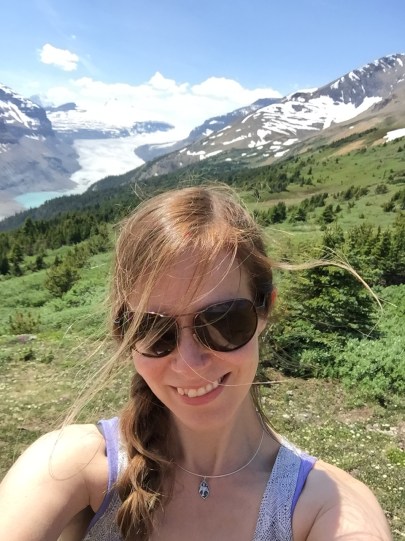
I had the opportunity to live in Singapore for a year and a half and focus on my writing. There, I made writer friends from around the world. I also had the unique chance to be enmeshed in cultures different from my own.

photo-10

Additionally, I’ve been lucky to travel to seventeen countries on four continents. I like adventures.

IMG_5241

Feel free to check out my upcoming YA Contemporary novel All the Walls of Belfast (March 2019, Turner Publishing).

IMG_4798_edited - Copy

My Wish List:

Number 1 Favorite: Contemporary YA

As a school psychologist, I love reading and writing YA that deals with the realities many teens face. I love well-researched stories that explore complex social and mental health issues in an empathic way. I do NOT want anything that glorifies, or could be construed as glorifying, suicide, self-injurious behavior, teen pregnancy, substance use, or eating disorders. I’m not necessarily looking for an “issue” book, but rather gritty YA contemporaries that show teens fighting to rise above external and internal conflict difficult situations through their own resilience. I want characters struggling with internal and external conflict, being forced into making impossible choices with real consequences that they suffer because of their own bad choices. I enjoy characters I grow to love who then make wrong choices that make me want to throw the book across the room. I’m also a fan of redemption and coming-of-age stories.

photo-5

I’m eager for stories that feature deep, authentic, conflict-ridden relationships between characters (whether romantic, friendship, or family) that drives the plot. I particularly enjoy stories where the secondary characters are well-developed and complex. As a school psychologist, I also like seeing adults in the character’s life taking on the mentor role, whether it’s a teacher, family member, or rando person, because having one positive adult relationship is one of the best ways to promote resilience in youth who are struggling.

I love to travel and learn about other cultures and sub-cultures. As such, I enjoy reads that open my eyes to people coming from backgrounds different from my own.

P1090942

Other interests:

I’d be open to character-driven Historical YA that features deep, conflict-ridden relationships, especially if it shows me cultures and places I’ve never been. I also would be open to light Magical Realism with strong character development.

MG, Fantasy (especially High Fantasy), and Sci-Fi aren’t really my area of expertise, so there are other mentors out there who might be a better fit.

What I’m looking for in a mentee:

I would like to partner with someone with an open mind and a query-ready manuscript who knows the heart of their story and is willing to work hard. I will say, for personal reasons, the sooner I can get the manuscript after you’re selected, the better, please.

What you can expect from me as a mentor:

Full manuscript developmental edit report (1 read through and report).I’m also more than happy to answer any questions and provide advice around querying and what comes after.

In terms of feedback, I’m…um…thorough and honest, let’s just say, because getting hard, constructive feedback and using it is really what has pushed me to be the writer I am today. Be prepared for long developmental edit letters or lots of comments, with suggestions on what you can do. I won’t re-write things for you, and I may not give ideas for fixing everything, because I don’t want to change your voice or your story. I’ll also point out what’s working and make suggestions things that aren’t based on what I see as your strengths as a writer. After you get the letter, I’m happy to bounce ideas back and forth and help you come up with a plan moving forward. This is the process my agent and I went through more than once!

I feel one of my strengths is developing characters that feel real and creating authentic internal conflict that drives and is driven by plot, and then using that internal conflict to create dynamic relationships with other characters, which then can drive the plot.

I’m open to different means of communication, ranging from email to potentially Skype, though that would take some careful planning.

If you have more questions, feel free to connect with me on Twitter. So, so excited to see your manuscripts!

celebration

Had to throw one GIF in there 😛

All the Walls of Belfast Novel Aesthetic

0

All the WallsI’m in between writing projects at the moment, so I took some time to play around with creating my very first novel aesthetic for All the Walls of Belfast. Most of the pictures are my own, but the others I obtained from Shutterstock and Pixabay. So excited about it!

Drawing inspiration from adventure

0

I’ve been busy updating my website. My biggest project: creating new photo pages documenting my journeys in Belfast and around Northern Ireland as a part of my research for All the Walls of Belfast, my YA novel. My first trip was in July 2011. I returned in July 2015, and then a third time in June 2016 (incidentally the day of the Brexit vote). These trips gave me the priceless opportunity to delve deep into the past, current events, differing perspectives, culture, dialect, and setting. Feel free to take a look 🙂

Using Core Beliefs to Create Authentic Characters

0

P1180332


I took this in Wilson’s Promontory National Park in Victoria, Australia. When you look at this picture, what do you think?

Obviously, there’s a million different thoughts you might have, ranging from okay, some dead trees, to cool mix of life and death/light and shadow, to when are the Ringwraiths going to ride out?

1476445_10100399083236525_620240967_n

This picture was taken on a subzero day in Wisconsin. I think, wow, it looks like these barren tree branches are covered with glittering diamonds. My husband thinks, ugh, Wisconsin winters.

In my day job, I’m a school psychologist. School psychologists are one of the mental health professionals in the schools. Translation: I like to dig into people’s brains (not literally) and figure out what makes them tick.

As I writer, I try to apply psychology when creating my characters, and use it to guide their reactions to events and interactions with other characters, as well as to find their unique voice.

When thinking about what makes people (and therefore my characters) tick, what’s made them who they are, a lot of it stems from their past experiences. Our past helps shape who we become, how we see the world, and how we interact with events and people. Our past experiences, stemming from birth and how our parents raised us, impact how our brain develops. It creates our core beliefs about ourselves, others, and the world.

So this is where I try to start with my characters. I don’t plot out their entire life story, but I think through how their parents raised them, the nature of the parent-child relationship, and general family things like siblings and extended family. Was it a close, intimate bond? Distant? Inconsistent? Who did they feel most connected to? Or were they connected to no one? Then I think through both positive and negative major life events that impacted them: deaths, moves to new communities, bullying, parental substance abuse, births of new family members, unique experiences, travel, etc. How did these impact how they see themselves, others, and the world?

Next, I consider who my character looks up to. Who is their role model? All of this creates my character’s core beliefs. Our core beliefs are things we generally accept as 100% true. Core beliefs dictate our whole lives and how we operate in the world. They can be healthy or unhealthy, protective or harmful. They can often cause tunnel vision to facts that challenge them.

Examples of core beliefs about self: I’m a good (or bad) person, I’m intelligent (or dumb), I’m worthy (or unworthy) of love, I can usually accomplish my goals (or not), I’m attractive (or ugly), I’m unique (or abnormal), I’m exceptional.  The rules don’t apply to me. People don’t understand me because I’m special. I deserve attention and praise. I can’t ask for help because that means I’m a loser. I have to do everything perfectly. My needs aren’t important. If I express negative feelings in a relationship, he/she will leave me. I’m helpless. I’m out-of-control. I don’t deserve good things. I’m going to be rejected/abandoned. It’s always my fault. These last few are big ones I see in children who have suffered abuse and neglect. They may start acting in ways to trigger rejection, so at least the rejection happens on their terms.

Examples of core beliefs about others: People are generally good (or bad), people see the best (or worst) in me or others, certain groups of people are more dangerous than others. It’s safe (or unsafe) to trust others. People should respect me. If I let people in, they will just betray me. People only look out for themselves. People always take and never give. Other people have all the luck. Other people have it easier.

Examples of core beliefs about the world: The world is generally safe (or dangerous), the world is fair (or unfair), there is a higher being, the world/God determines fate, my actions can impact the world and my fate, the world is beautiful (or ugly). Seeing only the bad actions or others and not the good. I can leave my door unlocked at night, or I need three dead bolts.Also the classic glass is half empty or half full or rose-colored glasses.

Now, putting my school psychologist hat on, I’m shifting into a counseling framework called Cognitive Behavioral Therapy. This posits our beliefs shape our perceptions of events and interactions, and shape our THOUGHTS about events. Our thoughts and interpretations of events then trigger our EMOTIONS in response. Then our thoughts and emotions cause us to ACT. Our actions are directly, causally related to the way we perceive and interpret events, which are created by our beliefs.

Our thoughts and perceptions don’t occur in isolation—they are fueled by our past experiences, which have created our world view and our core beliefs about ourselves, others, and the world.

Going back to the tree picture…. I grew up in Wisconsin. I don’t always love winter, but I try to find beauty in everything. My husband loves me so much, he endures Wisconsin winters for me, but despises every second of it. These experiences created our core beliefs about winter: a thing or beauty or something to be endured.

iceberg

The example I always use with children involves a dog.

Let’s say you were bit by a dog when you were younger, or your parents were constantly warning you to stay away from dogs because they’re dirty/dangerous. This may shape a core belief in you that dogs are bad. Therefore, when you see a cockapoo walking down the street, your thought might be “It’s going to bite me!” Your emotion might be fear. Your action might be to cross the street. If you’d never had those experience, your thought might be, “Oh, look at that cute dog!” Your feeling might range from indifference to happiness. Your action might be to just walk on by or even ask to pet it. But it all stems from beliefs about dogs.

Cognitive Behavioral Therapy teaches people to recognize and challenge core beliefs and initial thoughts.

For the writer, digging into character’s pasts, and figuring out their core beliefs, can help figure out who characters are, how they might think, feel, and therefore guide their actions in ways that feel authentic and real act in a way that is authentic and real. It helps find their voice.